Randolph’s Custom Caskets
Burnsville, North Carolina
The Wood Is Where It Begins.
Every species we work with has a character — a grain pattern, a density, a way of aging — and those characteristics tend to map onto a kind of person. Understanding that connection is how the right piece gets built.
Five Generations at the Bench
The Soul of Every Commission Lives in the Board.
We get asked the same question in almost every consultation: “What wood should we pick?” The honest answer is that the wood usually picks itself once we understand the person.
Every board we work comes through the shop as an individual. We look at the grain, the color, the figure, the way it moves under the plane. We know from handling thousands of boards that two pieces from the same tree will behave differently and finish differently. This is not a flaw in natural material. It is the reason no two pieces from this bench are ever exactly alike — and the reason a Randolph’s piece can be built for a specific person rather than assembled for a general concept of one.
Most of our lumber comes from within five counties of this bench — milled in these mountains, dried here, worked here. A smaller portion comes from our own farm: trees we selected, felled, and milled ourselves, with the offcuts returned to the soil around the trees we planted to replace them. This program paused after Hurricane Helene and resumes in 2027. In the meantime, everything but our specialty hardware originates in North Carolina.
This page is here to help you see what we see in each species — so that when the question comes up in your consultation, you already have a sense of the answer.
Signature Series
The Paired Grain Collection — Two Woods. One Piece.
When we took over the bench, our first design as mastercraftsman was built from two species: oak for the lid, pine for the side walls — the pine stained black onyx, the oak in aged bourbon. The contrast between them was immediate and unmistakable. What we found was that having two colors to work with made the whole piece come to life in a way a single species couldn’t achieve alone. That first piece became the foundation of what we now call the Paired Grain Collection — commission builds that intentionally pair two wood species, using the contrast between them as a design element rather than an accident. We have never seen another maker use this approach. We don’t claim to have invented the concept of combining woods, but the intentional pairing of species for emotional and visual contrast, matched to the specific person being honored, is ours.
Signature Pairings
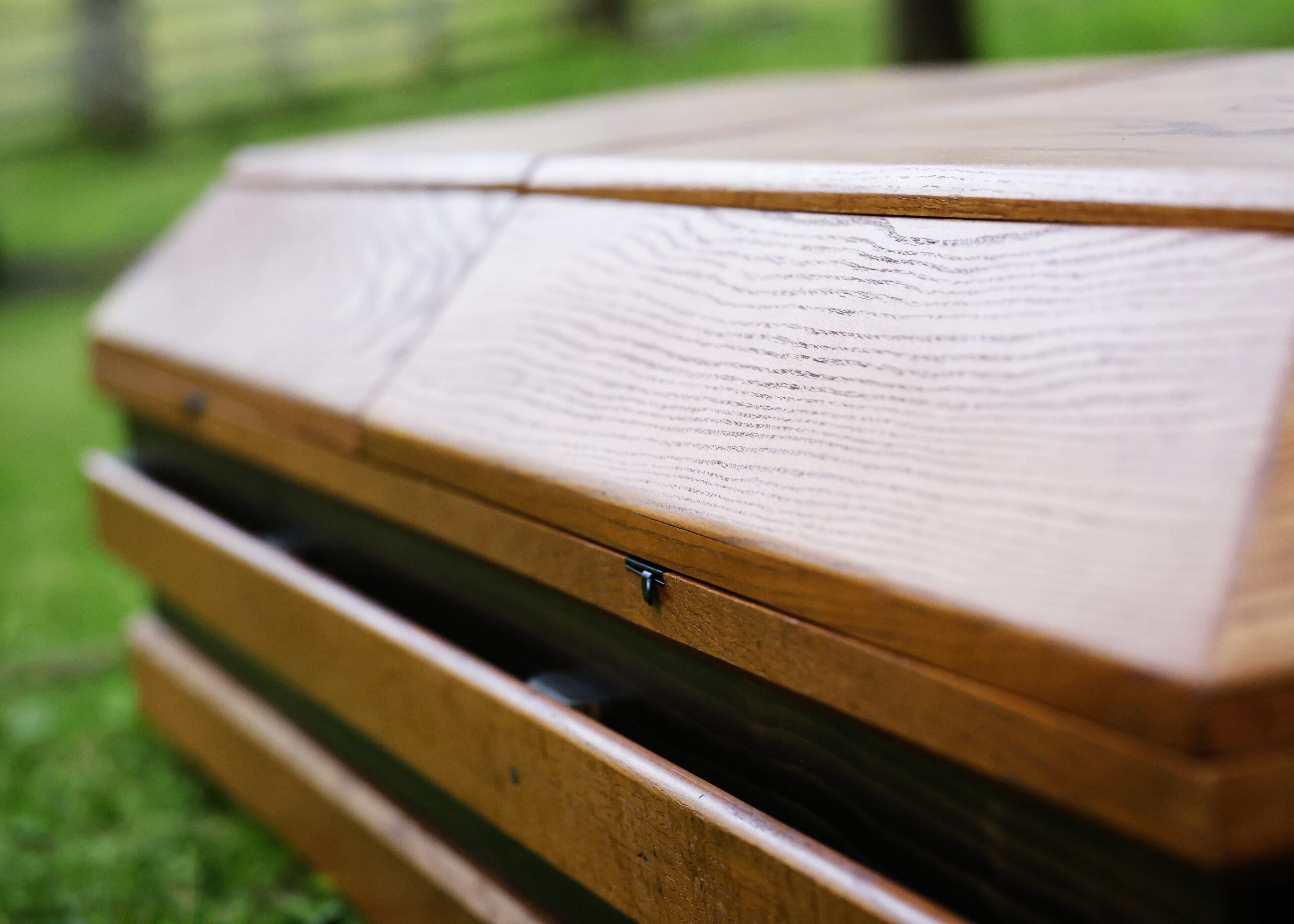
Oak & Pine
The Founding Pair · Our First Design
Oak lid in aged bourbon stain, pine side walls in black onyx. Deeply masculine, architecturally bold. The piece that started this concept. The contrast between the warm oak and the dark pine creates a drama that neither species produces alone.
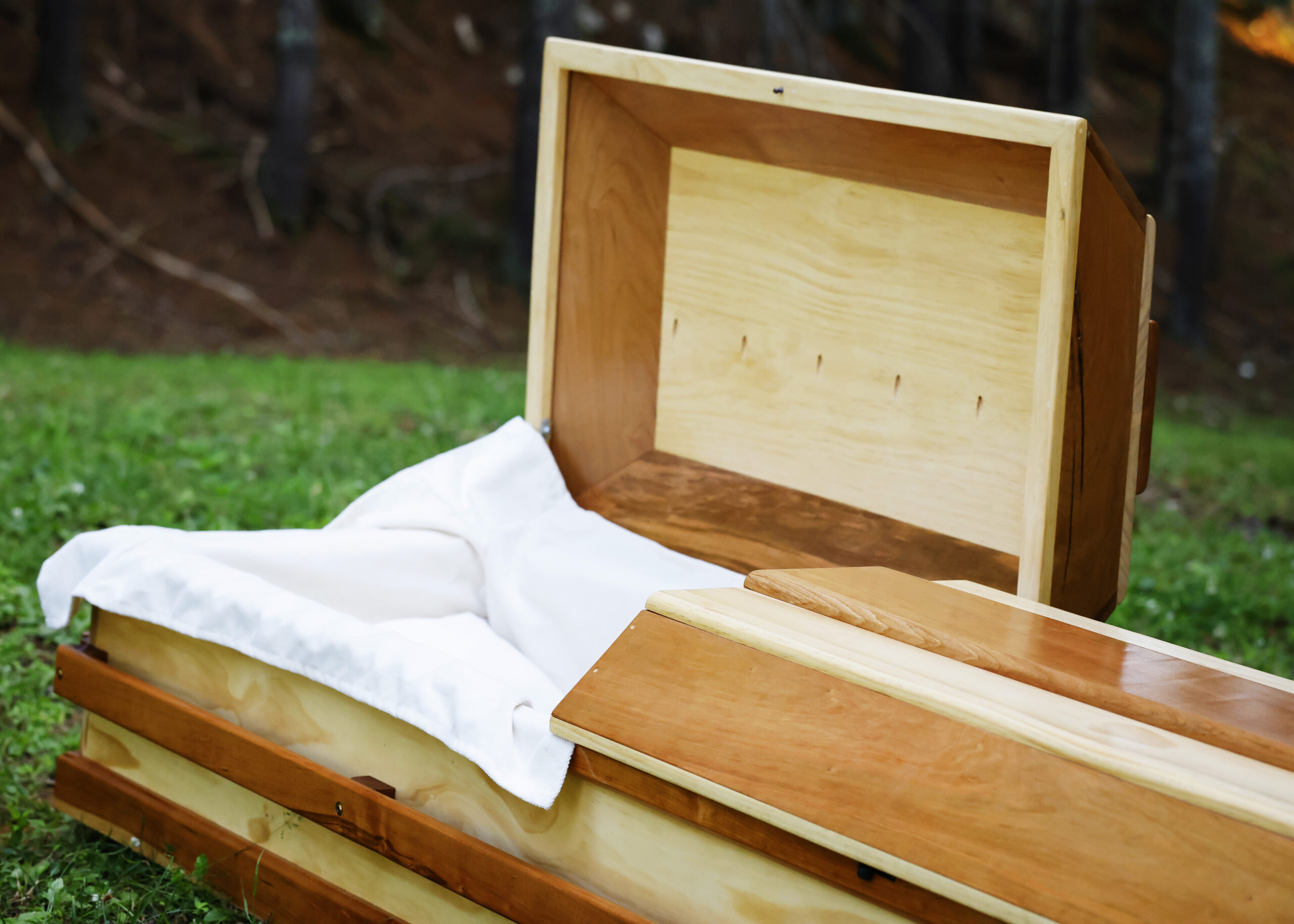
Cherry & Pine
The Counterpoint · High Gloss Clear
Built as the natural companion to the oak and pine — cherry and pine in a high gloss clear finish. Warm, refined, luminous. The piece that showed the range of what the two-species approach could do. We have built more matching sets from this pairing than any other.
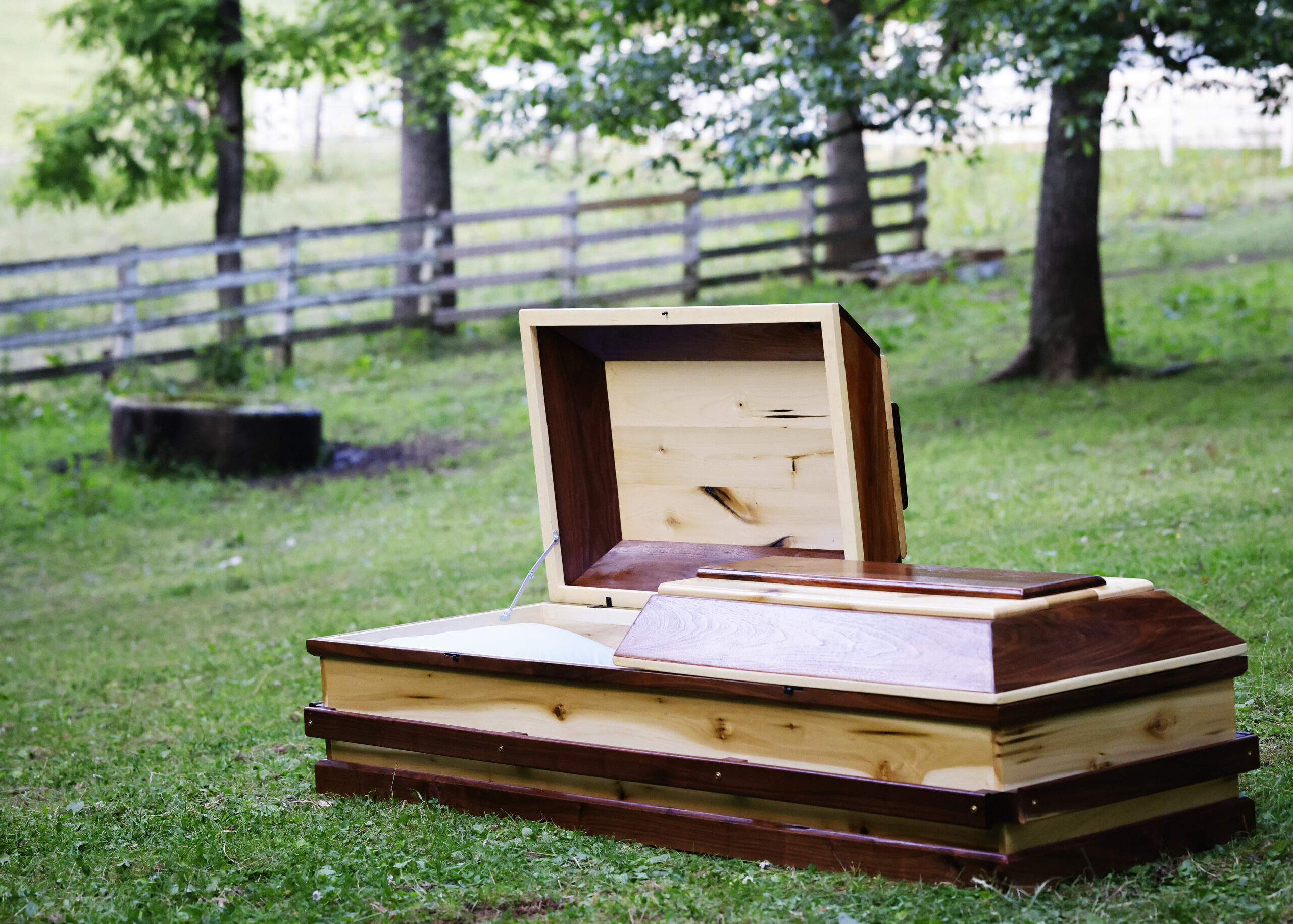
Walnut & Poplar
The Standout · Natural Clear
Left uncolored in a clear finish so both species speak for themselves — the deep almost purple of the walnut against the pale cream of the poplar. One of the most visually striking combinations we’ve produced. The contrast is highest when neither wood is stained.
A note on finish: High gloss clears for women and satin sheens for men — that is what the industry says. We have built every combination in every direction. There is no right or wrong way. We build what speaks to you and to the person this piece is for
What the Pairings Mean
The reason these combinations work isn’t just visual — it’s that the two species carry different characters, and placing them together says something that neither says alone. Oak and pine is the pairing of the steadfast and the humble. Oak is the person who held the room. Pine is the person who held the family. Together they say: this life was both immovable and approachable — the rare combination that makes a person truly irreplaceable. Cherry and pine is warmth alongside simplicity. Cherry deepens with time and light — it becomes more beautiful the longer it exists. Pine is honest, fragrant, and uncomplicated. Together they read as someone who made everything around them feel warmer without trying to, someone whose presence was its own kind of shelter. This is why we’ve built more matching sets from this pairing than any other. Walnut and poplar is sophistication alongside adaptability. The deep, almost-purple walnut commands immediate attention. The pale, understated poplar steps back and lets it. Together they describe someone who understood when to lead and when to listen — someone whose influence was felt more than announced. When a Paired Grain build is for a couple — one piece for each, built from the same two species — the pairing carries a second meaning: two lives that were different in character but belonged together. We have built more matching sets from the Paired Grain approach than any other method. It is, before the Transition System, what has set this bench apart. Every Paired Grain build is a commission — there are no catalog versions of these. The species selection, the finish, and the sheen level are all part of the design conversation. If you are drawn to the idea of two woods working together, bring it to your consultation and we will build from there.
The Species We Work
Select Your Wood
Each species below links to a dedicated blog post where we go deeper — the history, the mythology, the specific characteristics that matter when you’re making this decision. The overview here is meant to give you a first impression. The posts are meant to help you make up your mind.
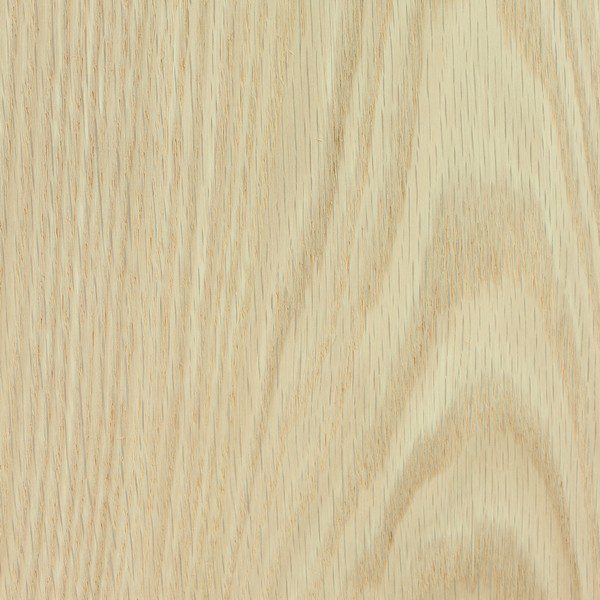
Red Oak - Locally Sourced · Yancey County, NC
For the person everyone leaned on. The one whose word was final and whose handshake meant something. Oak doesn’t ask you to look past its character — it leads with it.
Oak
The Steadfast
The most prominent grain in our shop. Open-pored, assertive, and unmistakable — oak announces itself the moment you see it. The medullary rays that radiate through a quarter-sawn board catch the light in a way no other species does. This is not a quiet wood, and it was not meant to be.
Oak is one of the densest hardwoods we work. It holds joinery with exceptional grip, takes a finish that deepens rather than sits on the surface, and ages in the direction of dignity rather than wear. In the Scots-Irish and English traditions that settled these mountains, oak was the timber of endurance — used for the structures that were expected to outlast their builders.
In Cherokee tradition, oak was the tree of strength and protection. In Norse mythology, it was sacred to Thor — not because of power for its own sake, but because of the kind of strength that shelters others. That correspondence feels right for the people who tend to choose it.
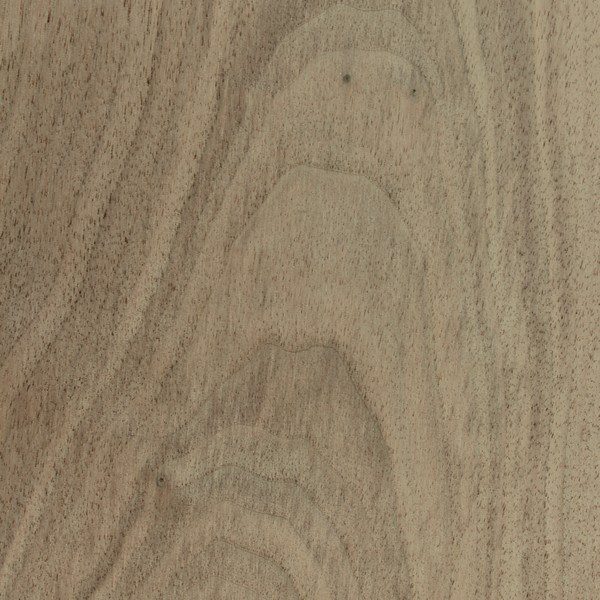
Black Walnut · Locally Sourced · Western NC
For the person whose presence commanded a room without raising their voice. Substance over show. Walnut doesn’t need to be loud — it simply is what it is, and what it is stops you.
Walnut
The Distinguished
Deep, almost-purple heartwood — closer to dark plum than brown when the light catches it right — finishing to a surface that looks like it was poured rather than planed. The grain is straight to lightly figured, occasionally streaked with purple or dark ribbon patterns in exceptional boards. Air-dried walnut develops a richness that kiln-dried material doesn’t reach — one of the reasons we’re particular about our source.
In the German and Swiss traditions that settled the southern mountains alongside the Scots-Irish, walnut was the wood of the craftsman class — too valuable for common use, too beautiful to waste on anything less than the finest work. In Greek tradition, it was associated with wisdom and with Jupiter — the kind of authority that doesn’t need to announce itself.
Walnut also pairs exceptionally with lighter species in our two-tone builds. Cherry and walnut together is one of the most elegant combinations we work — warm against dark, refined against rich.
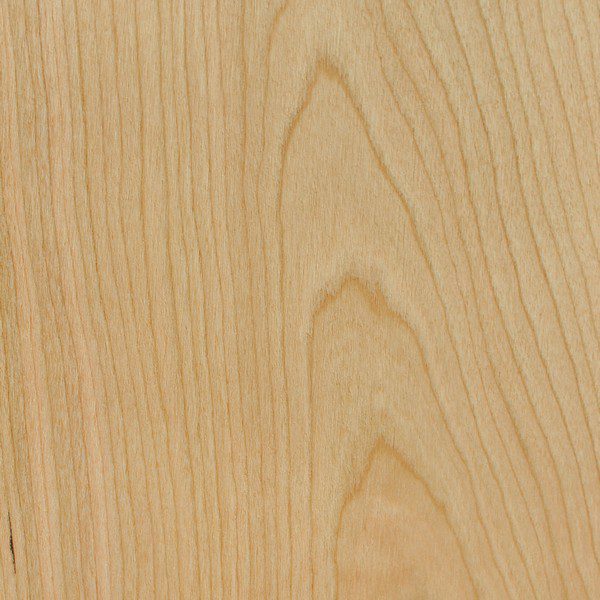
Black Cherry · Appalachian Native
For the person whose impact only became clearer with time. Cherry is the only species in our shop that continues to become more beautiful after it leaves the bench.
Cherry
The Refined
Fine, straight grain with a surface that takes finishing to an almost glassy smoothness. Fresh cherry runs from pale pink to light reddish-brown — but leave it in the light for a few months and it deepens into a warm auburn that looks like it was stained, even when it wasn’t. This oxidation process is one of the most remarkable things natural wood does, and cherry does it better than any other species we work. For pieces going directly into service, this is one of many reasons cherry photographs and presents beautifully from day one. For pre-planned pieces stored over years, the deepening is something to look forward to.
In Irish tradition — well represented in these mountains — cherry was associated with sweetness, love, and the endurance of the things worth keeping. In Christian symbolism, the cherry is the fruit of paradise. The tree that produces something worth treasuring even after the season for it has passed.
Cherry is also the species that appears most often in our matching sets for couples. There is something fitting about a wood that deepens with time for two people who did the same.
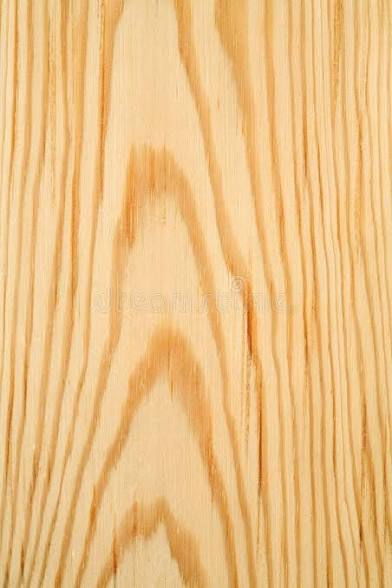
Eastern White Pine · Appalachian Native
For the person who never needed to be the most important person in the room — and somehow always was. Pine is the traditional choice of these mountains, used here long before walnut was fashionable. It has nothing to prove.
Pine
The Humble
Soft, light, fragrant — pine carries visible knots and a grain that moves in honest, undisguised patterns. It doesn’t hide its character under a smooth surface. The fragrant resin it contains acts as a natural preservative and gives pine-built pieces a scent that is immediately recognizable as something real rather than something manufactured.
Pine was the original building timber of Appalachia. Every cabin, every barn, every church in these mountains was built from it first. In Cherokee tradition, the pine was the tree of peace — the one that remained green through winter when everything else had gone bare. Steadfast through the difficult seasons.
In our two-tone builds, pine paired with cherry or walnut creates a contrast that makes both species more visible. The light and the dark together say something that neither says alone.
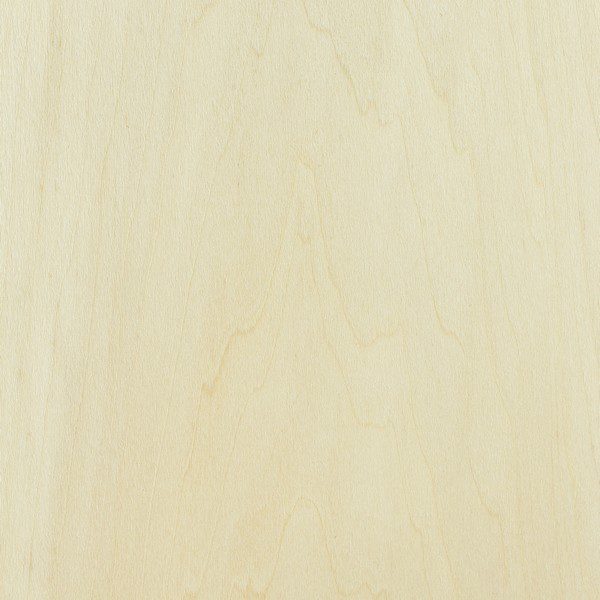
American Basswood · Locally Sourced
For the person whose life was defined by intricate work — the quilter, the watchmaker, the surgeon, the artist. Basswood is chosen when the design itself needs to be the story and the wood needs to carry it without competing.
Basswood
The Detailed
Pale cream with an almost featureless grain — uniform, fine, and exceptionally carve-friendly. Basswood is not a wood that announces itself. It is a wood that accepts what is asked of it and holds the detail precisely. Its cellular structure is remarkably consistent, which is why woodcarvers and model-makers reach for it before anything else.
In European folk tradition, basswood — known as linden in much of the world — was associated with love, creativity, and the gift of healing. In German heritage specifically, the linden was the gathering tree: the place where communities came together, where stories were told, where marriages were blessed. It is the tree of connection.
On a themed piece where every surface needs to carry carved or painted detail, basswood is our first choice. On a standard build where the grain needs to step back and let the finish do the work, it performs equally well.
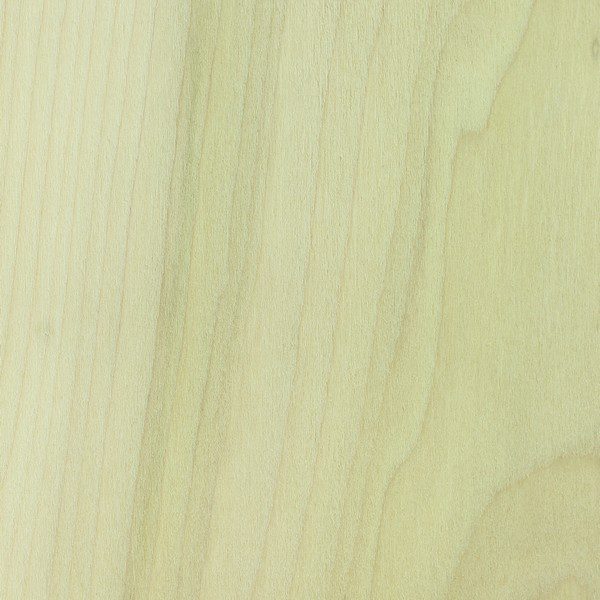
Yellow Poplar · Locally Sourced · Western NC
For the person who made every room better by being in it — who could talk to anyone, adapt to anything, and make the people around them feel more capable. Poplar is the wood that enables whatever vision is brought to it.
Poplar
The Adaptable
Creamy white to pale yellowish-brown, often streaked with green or purple in the heartwood — poplar’s own character is subtle rather than bold, which makes it an exceptional canvas. It planes, shapes, and finishes beautifully. It holds paint and stain with even absorption. It machines consistently and responds well to hand tools.
In many traditions, the poplar was the tree of the threshold — the place between what was and what comes next. Its leaves tremble in the slightest wind, giving it an association with movement, with sensitivity, with awareness of change. In Roman mythology, the white poplar was Hercules’ tree — not the strength of oak, but the endurance that outlasts difficulty.
Poplar also provides one of the most cost-effective paths to a specific custom finish or paint color without sacrificing structural integrity. If the vision calls for a painted or deeply stained piece, poplar carries it faithfully.
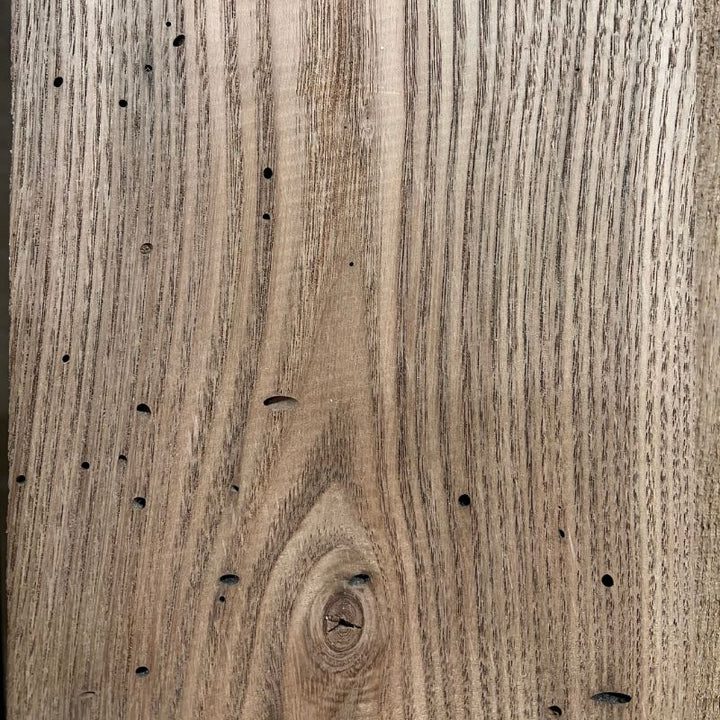
Reclaimed American Chestnut · Subject to Availability
For the person whose own story was singular and irreplaceable. Every board of wormy chestnut in existence is reclaimed material. The trees are gone. This is what remains of them — and it is extraordinary.
Wormy Chestnut
The Rare Legacy — Subject to Availability
The American Chestnut once made up nearly a quarter of the hardwood forest in the eastern mountains. The chestnut blight of the early twentieth century wiped it out almost entirely — billions of trees gone within a few decades. What we work today is reclaimed timber, recovered from barns, fences, and structures built before the blight. Every piece carries the worm-trail tunnels left by the beetles that came after the trees fell: distinctive oval marks in irregular patterns that no other species produces and that cannot be replicated artificially.
In Cherokee tradition, the chestnut was a food tree, a medicine tree, and a shelter tree — one of the most giving of the forest species. Its loss was catastrophic in ways that went beyond timber. To work with what remains of it is to work with something that should be treated accordingly.
We do not always have wormy chestnut in stock. When we do, we tell you. If you’re interested in a piece built from it, the conversation about availability is the first conversation we have.
Availability must be confirmed before this species can be included in a commission. Contact us directly before beginning the design process if wormy chestnut is your first choice.
The Stories Behind the Species
What the Wood Meant to the People Who Settled These Mountains
Our blog posts on each species go deeper into the traditions and meanings that the Cherokee, the Scots-Irish, the German, the English, and the Irish settlers brought to these mountains — and into what Norse, Greek, Roman, and Christian traditions say about the trees that grew here long before any of them arrived. The wood species you choose carries more history than you might expect. We didn’t write those posts to be poetic. We wrote them because these stories are genuinely part of why a family tends to feel that a particular wood was right for a particular person — even before they can articulate why. If you find yourself drawn to a species without knowing why, the history of that wood is often the explanation.
Cherokee Tradition
The Eastern Band of Cherokee people lived in these mountains before European settlement. Their relationships with specific trees — oak for strength, pine for peace, chestnut for sustenance — form the oldest layer of meaning in this region.
Scots-Irish Heritage
The largest single immigrant group in Appalachia brought with them Celtic traditions around the sacred grove and specific trees as symbols of protection, endurance, and connection to the ancestral land
German & Swiss Settlers
The craftsman traditions of the Pennsylvania Dutch and German communities shaped how these mountains worked wood — with walnut and cherry elevated to the status of fine material, suitable only for the most important work
Norse & Classical
The mythological traditions of Northern Europe and the ancient Mediterranean world gave specific trees specific meanings that traveled with the settlers who carried those traditions. Many of those associations still feel intuitively correct today.
How We Build
Where Artistry Meets Precision.
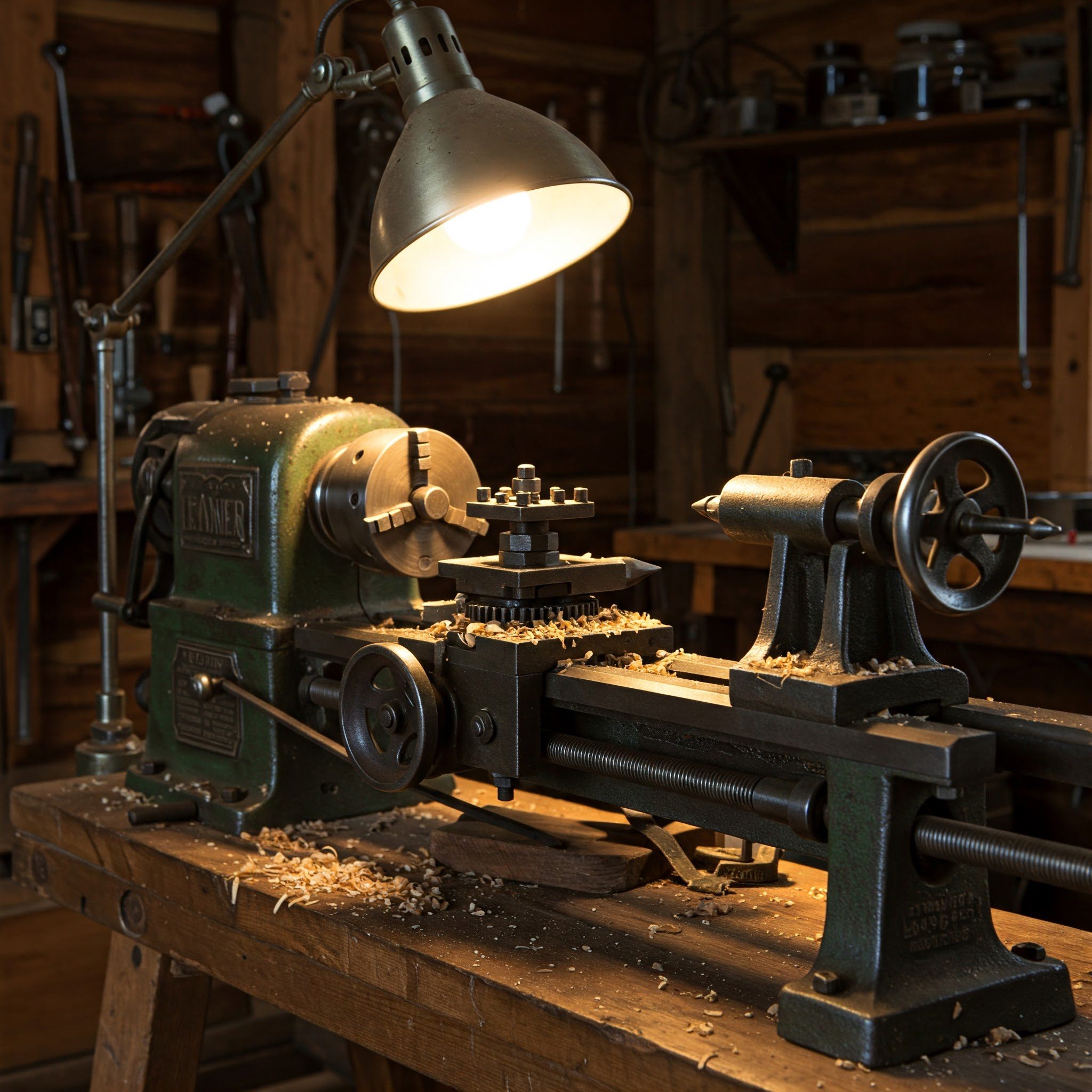
Every commission begins with wood selection. We design in SketchList 3D before a board is cut — so the joinery is engineered to fit before it’s built and the moving parts of our transition systems are held to tolerances that production makers never need to consider. Each board is run through the jointer for a true, straight edge. Assembly is done to custom-built jigs that ensure square and consistent alignment across every piece that leaves this bench. The lid — which carries the most prominent grain of the piece — is where we place boards with exceptional character. What looks like a feature in the finished piece was selected specifically to be there. Sanding moves from coarse through fine, bringing the surface to the finish-ready condition the material deserves. The finish is spray-applied in a controlled professional environment with dedicated air filtration — the same standard a museum conservator would demand for irreplaceable material. As our new facility comes online, we’re moving to a 2K polyurethane system that provides significantly greater durability and protection, particularly for pieces intended for long-term storage. We don’t rush it. We don’t shortcut it. The piece takes the time it takes to be right.
Understanding Your Options
Casket Styles — What We Build and What Each Means
The style of a casket determines its overall form and how the lid is configured. Most people haven’t thought about these distinctions before they need to — this is here to change that.
Half Couch — Raised Lid
Our Signature Style
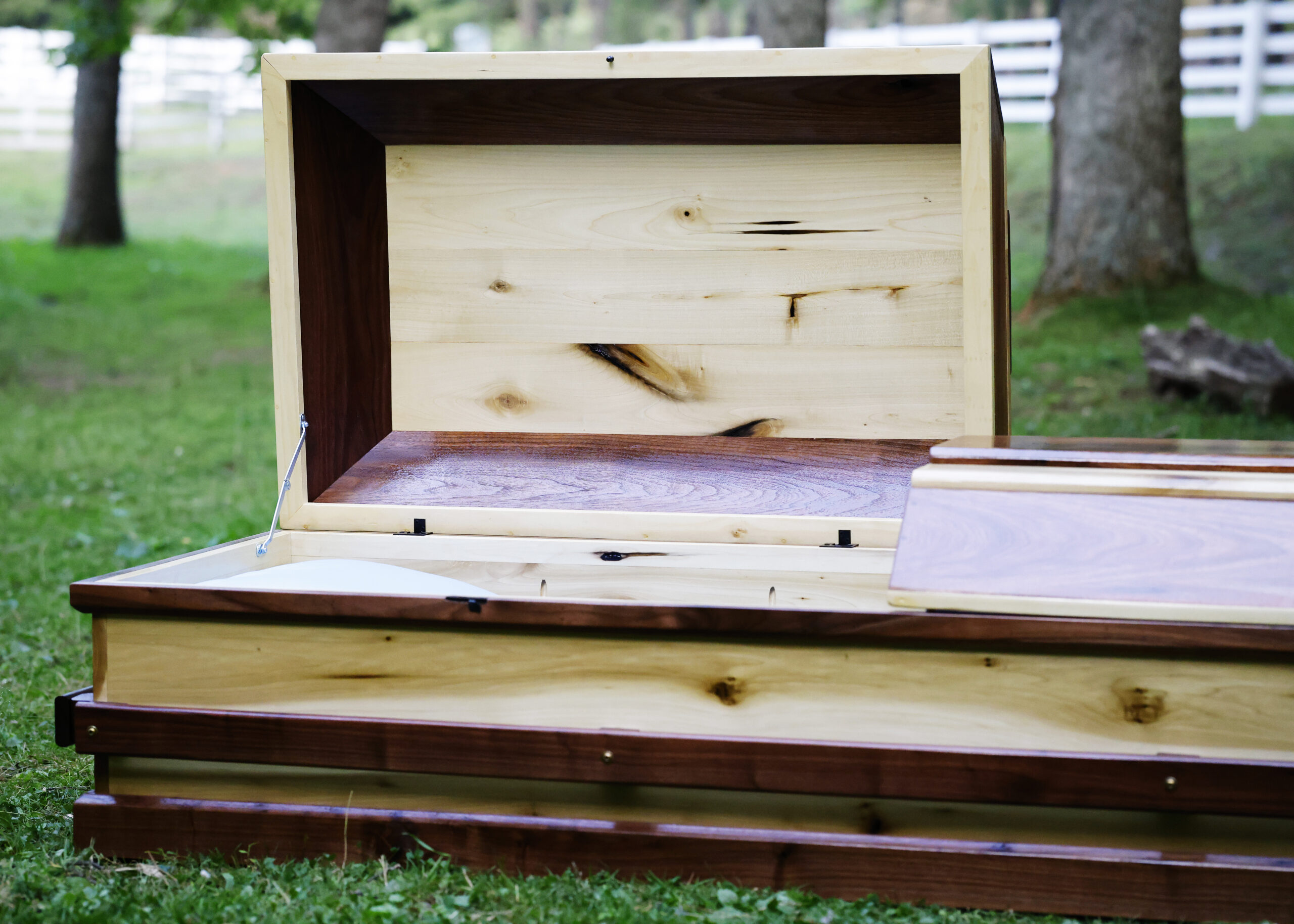
The traditional American casket silhouette — a split lid where the upper half opens for viewing and the lower half remains closed. Our version features a raised, canted lid: angled side sections rising to a flat top panel with a cap rail along the top edge. This is the style most of our commissions take. It photographs well, presents with dignity, and gives the lid its own visual weight. The cherry and pine piece in our gallery is a perfect example of this style before finishing.
Full Couch
Single-Lid, Full View
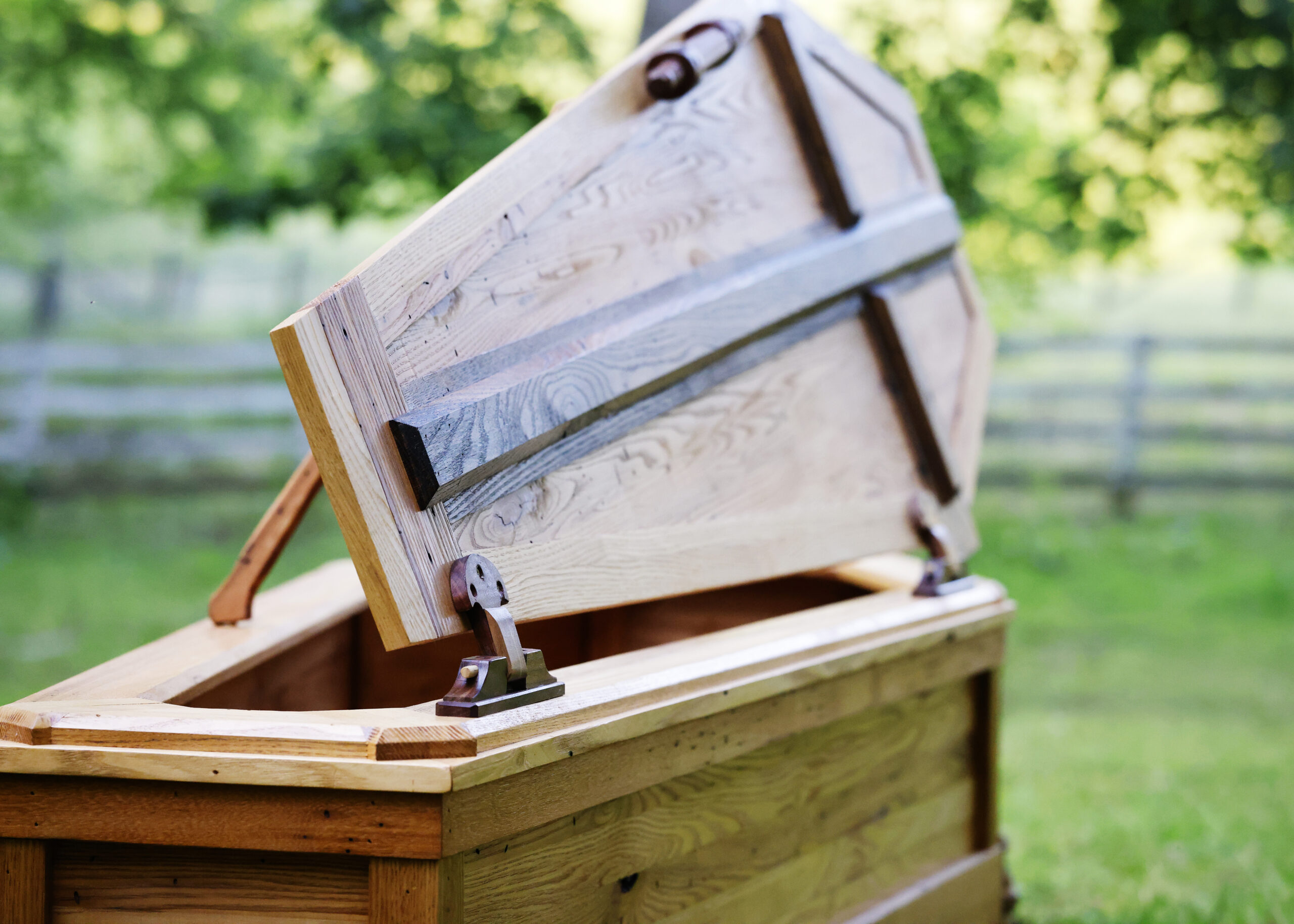
A single lid that opens along the full length of the casket rather than splitting at the mid-point. Chosen when a full-length viewing is desired or when the interior presentation is itself part of the tribute. Less common than the half couch but appropriate for certain themed builds and certain traditions.
Flat Top Casket
Clean, Architectural
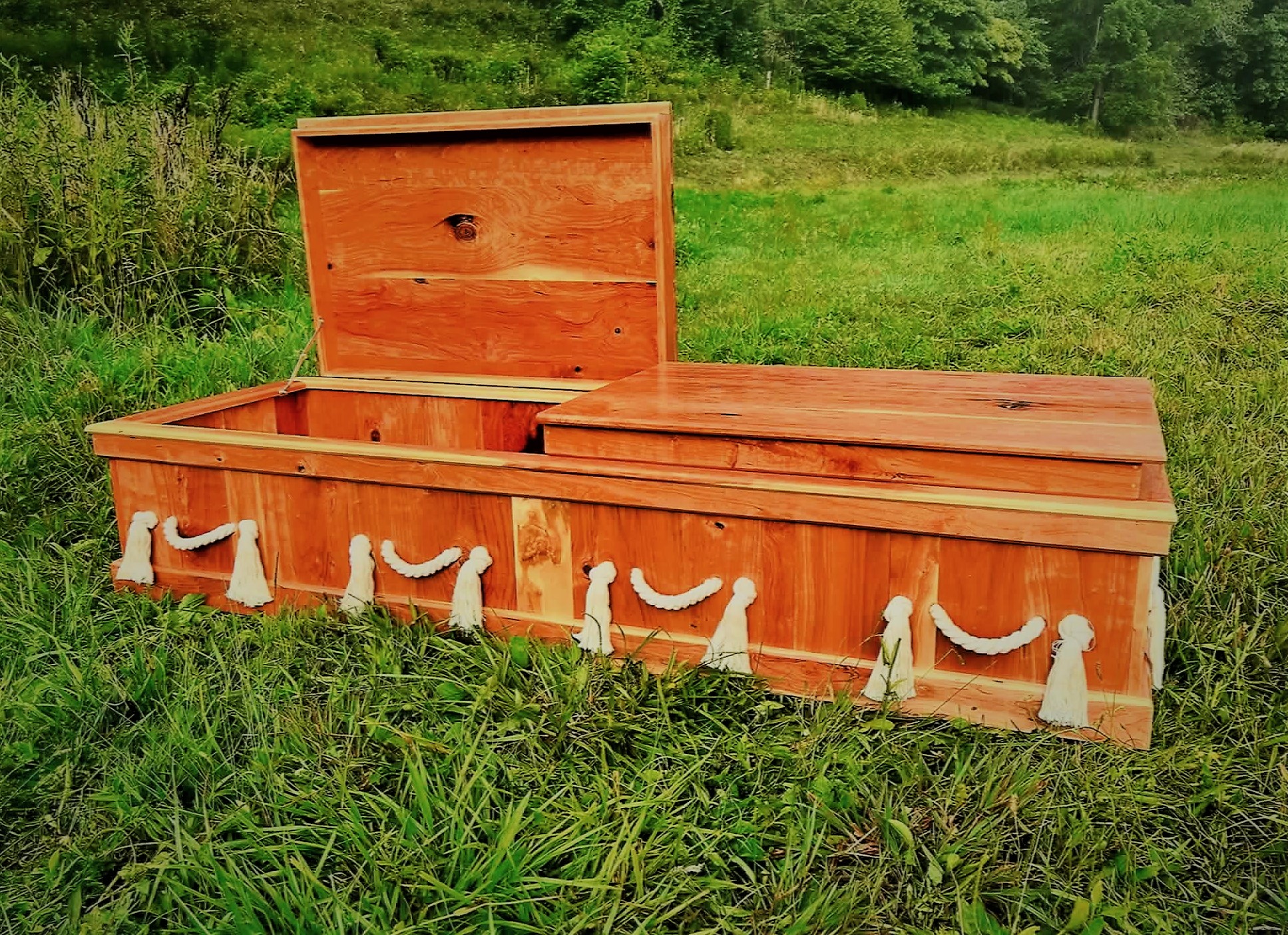
A completely flat lid without the raised cant profile. More contemporary in its lines — architectural rather than traditional. The flat top allows the grain of the lid boards to be the sole visual focus without the geometry of a raised profile competing for attention. Works particularly well with figured walnut, highly grained oak, or Poplar where the board itself is the statement.
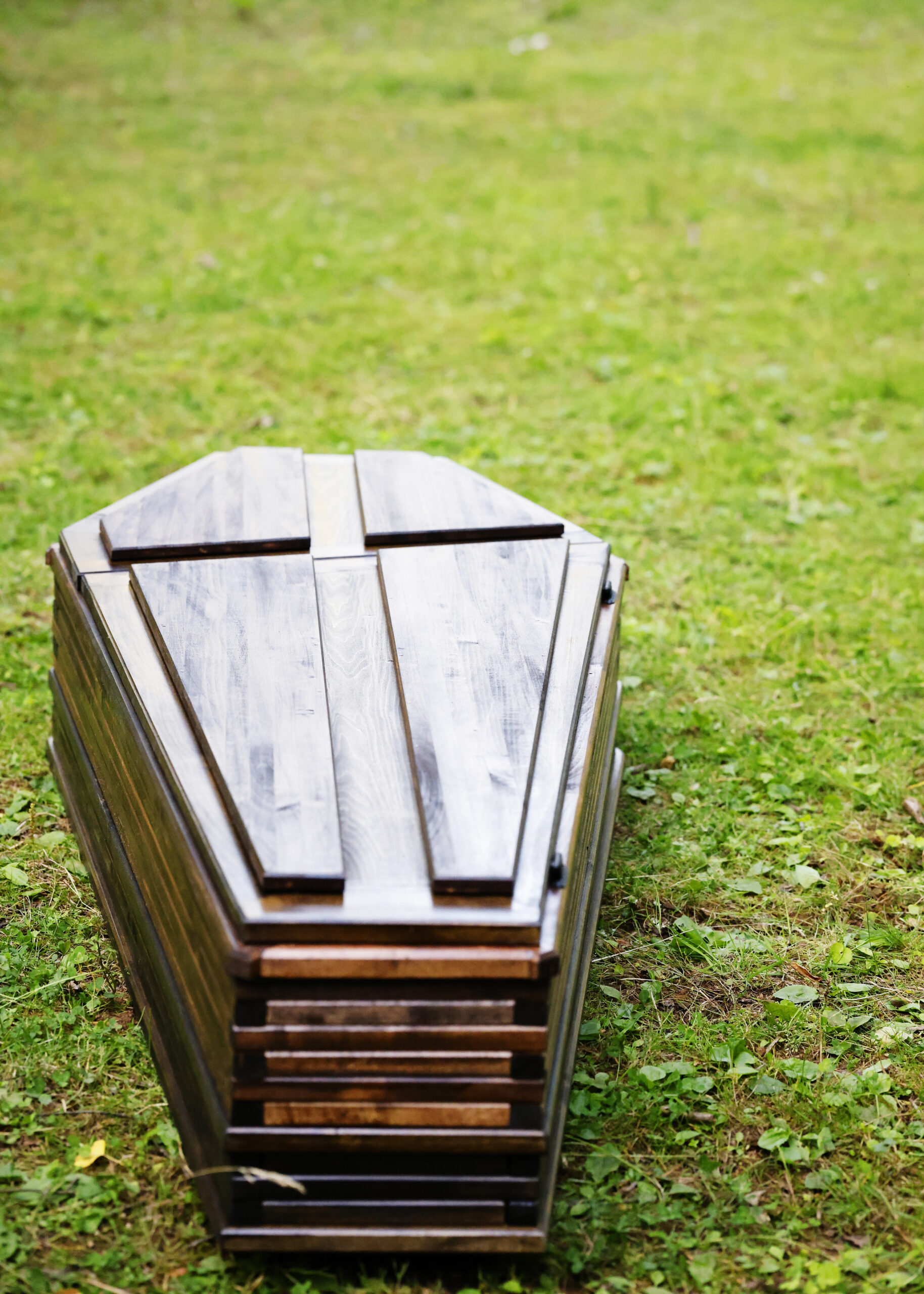
Coffin (Six-Sided)
Toe Pincher · Traditional Form
The six-sided tapered form — wider at the shoulders, narrowing at the head and foot. This is what most people picture when they hear the word “coffin” and it is distinct from the rectangular casket form. The coffin predates the rectangular casket as the standard burial vessel in this region and in much of the Western world. We build coffins by commission — often called toe pinchers or cowboy caskets — and they pair well with the Paired Grain approach for a piece that makes a visual statement unlike anything in a funeral home showroom.
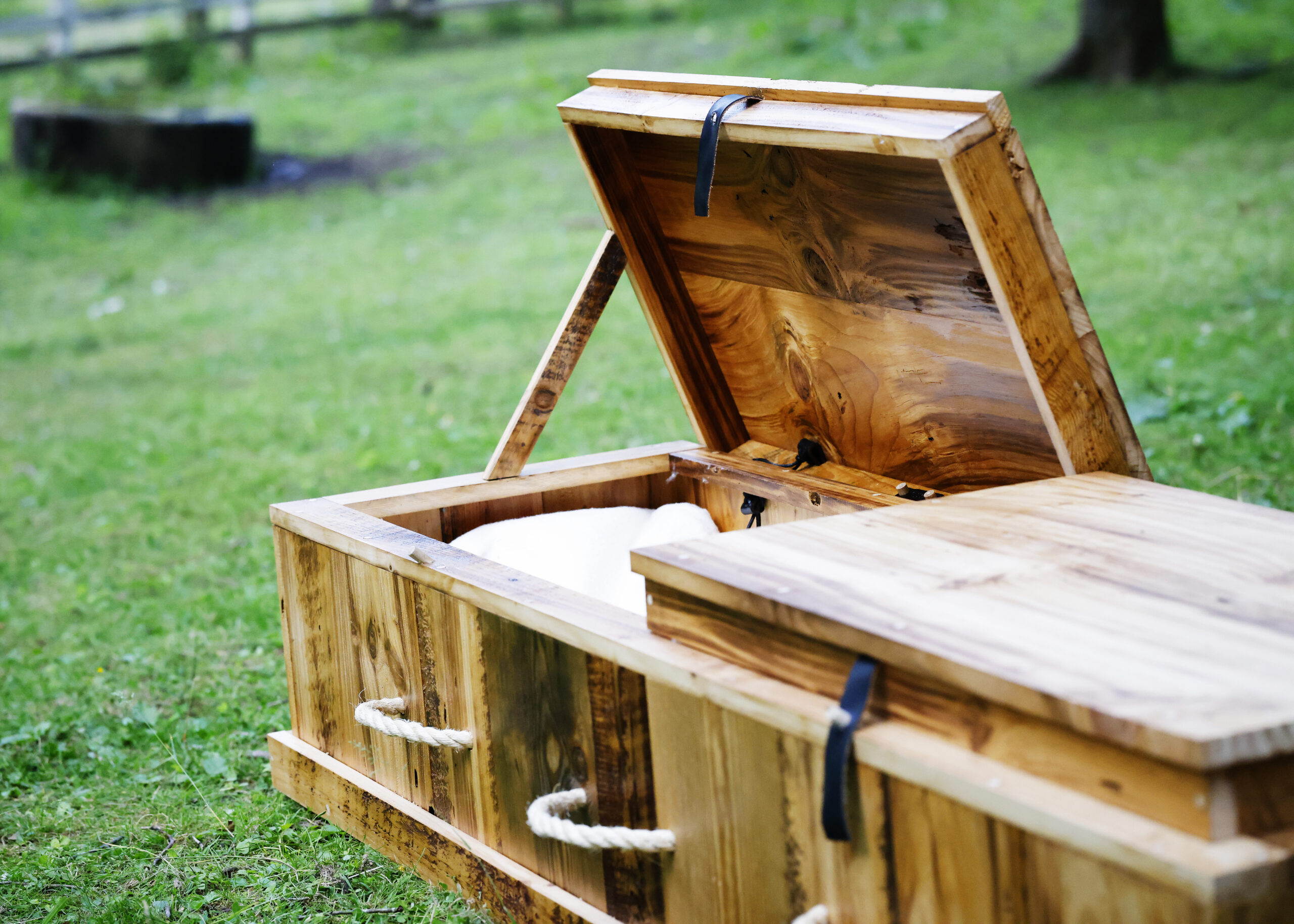
Green Burial Casket
No Metal · Traditional Joinery
A casket built entirely without metal components — we use leather or rope for the hinges and closers, and wooden pegs replacing metal screws. A flat-top design is the typical style, but the main focus is for the piece to return to the earth. Green burial certification requirements vary by cemetery. We build to spec and confirm requirements with you and the cemetery before construction begins. No-metal construction requires approximately 25% more labor time and is reflected in the project quote. Pine and basswood are the most common species choices for green builds.
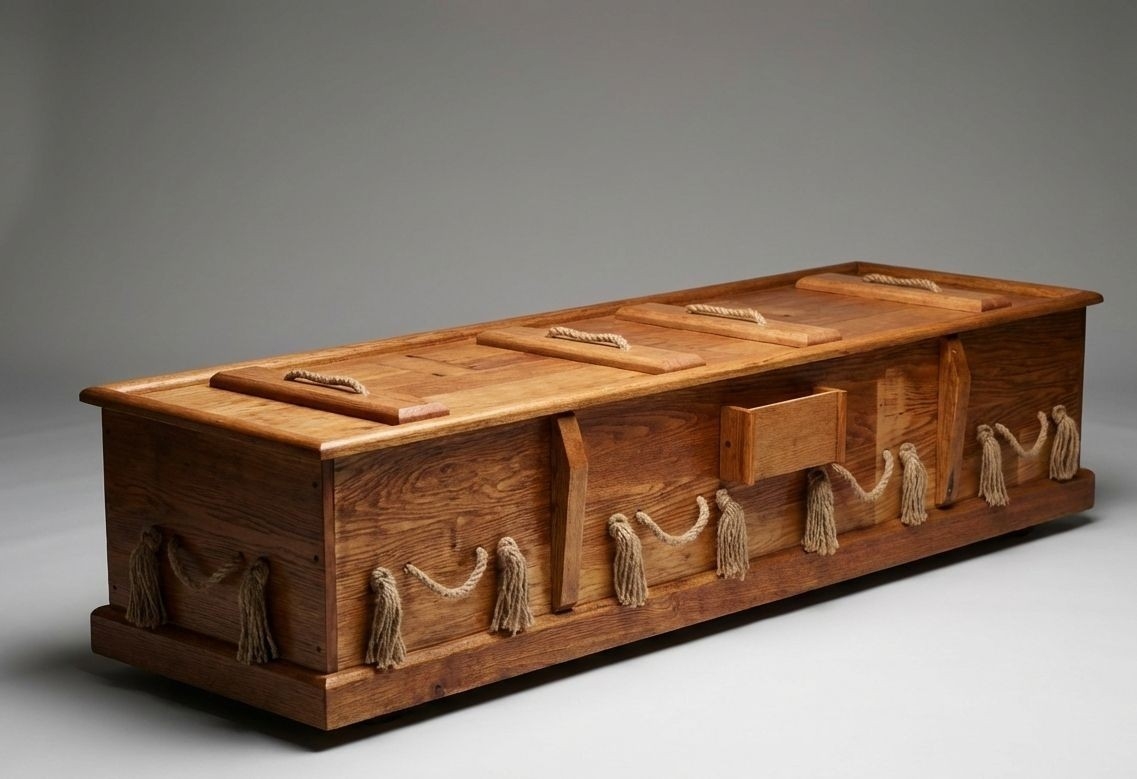
Repurposed Builds
Church Pew · Reclaimed Material
Select commissions are built from repurposed and reclaimed material — church pews, barn lumber, or client-supplied wood with personal significance. These pieces carry history in the material itself before a single joint is cut. If the person being honored had a connection to a specific place or a specific piece of wood, bring that to the consultation. We’ll tell you what’s possible.
No style is more dignified than another. The right style is the one that fits the person, the tradition, and what allows the family to celebrate the life and help ease the grieving process.
Interior Design
Simple Elegance. Nothing That Competes With the Wood
Our interior philosophy is straightforward: the casket is the tribute. The interior exists to present the person with dignity — it should complement the wood, not distract from it. Every interior begins with a premium high density foam base for gentle, even support. We work with you to select a cotton fabric color that coordinates with the wood species and the anticipated attire. A matching pillow and a mid-section drape complete the presentation. For themed pieces, the interior color and fabric selection is part of the overall design conversation — a themed commission will get a theme-appropriate interior that may differ from a traditional hardwood build.
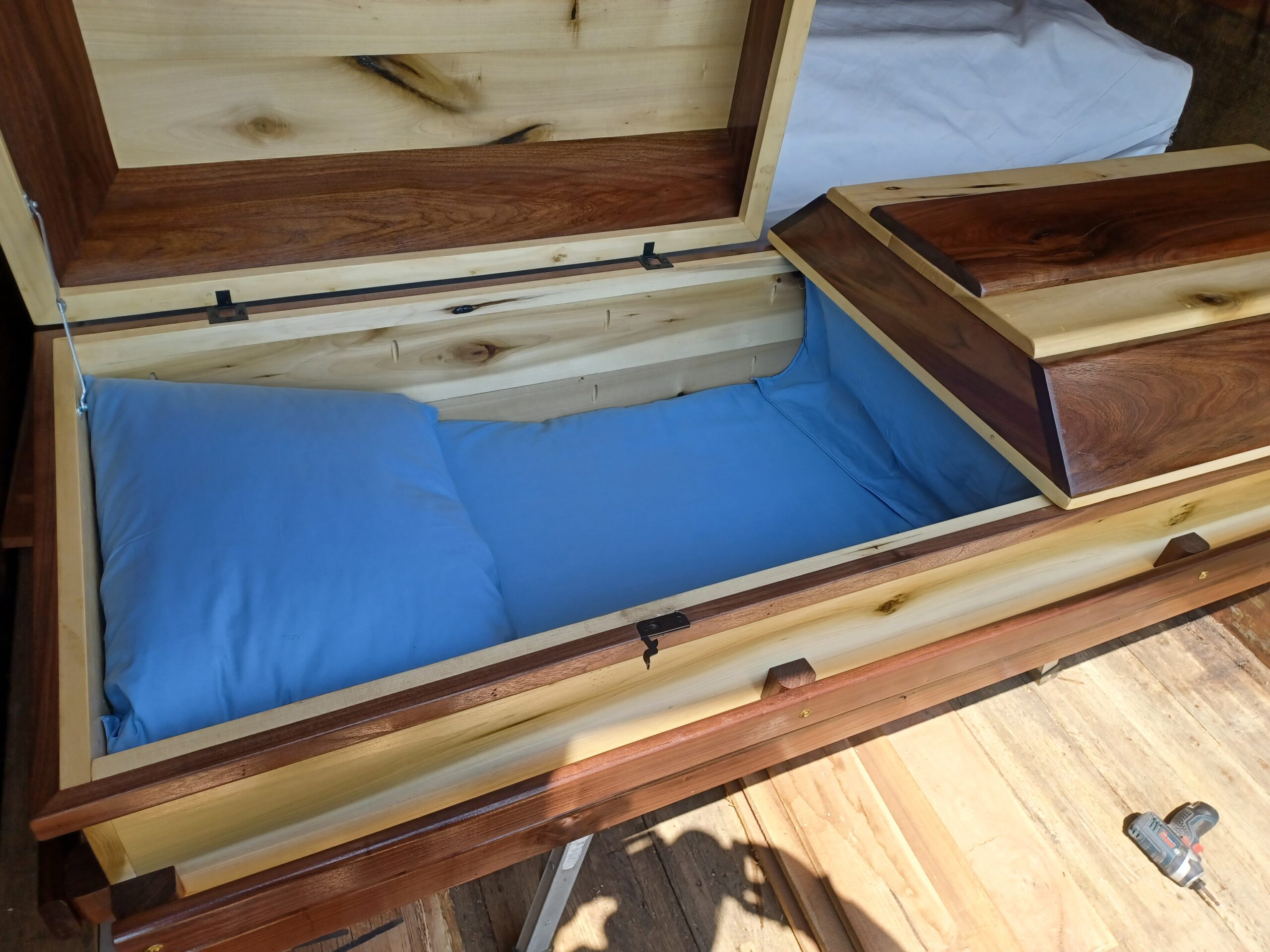
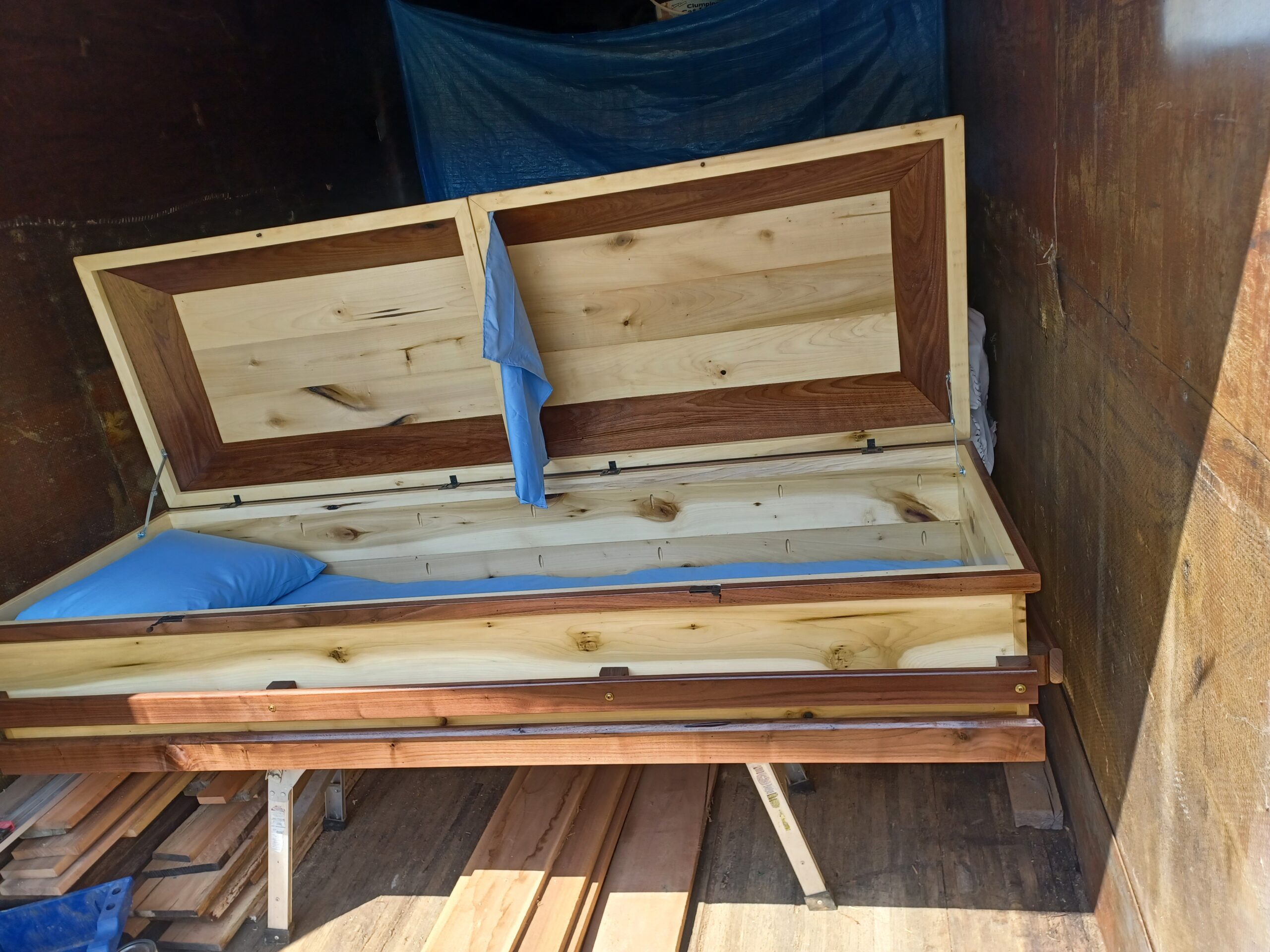
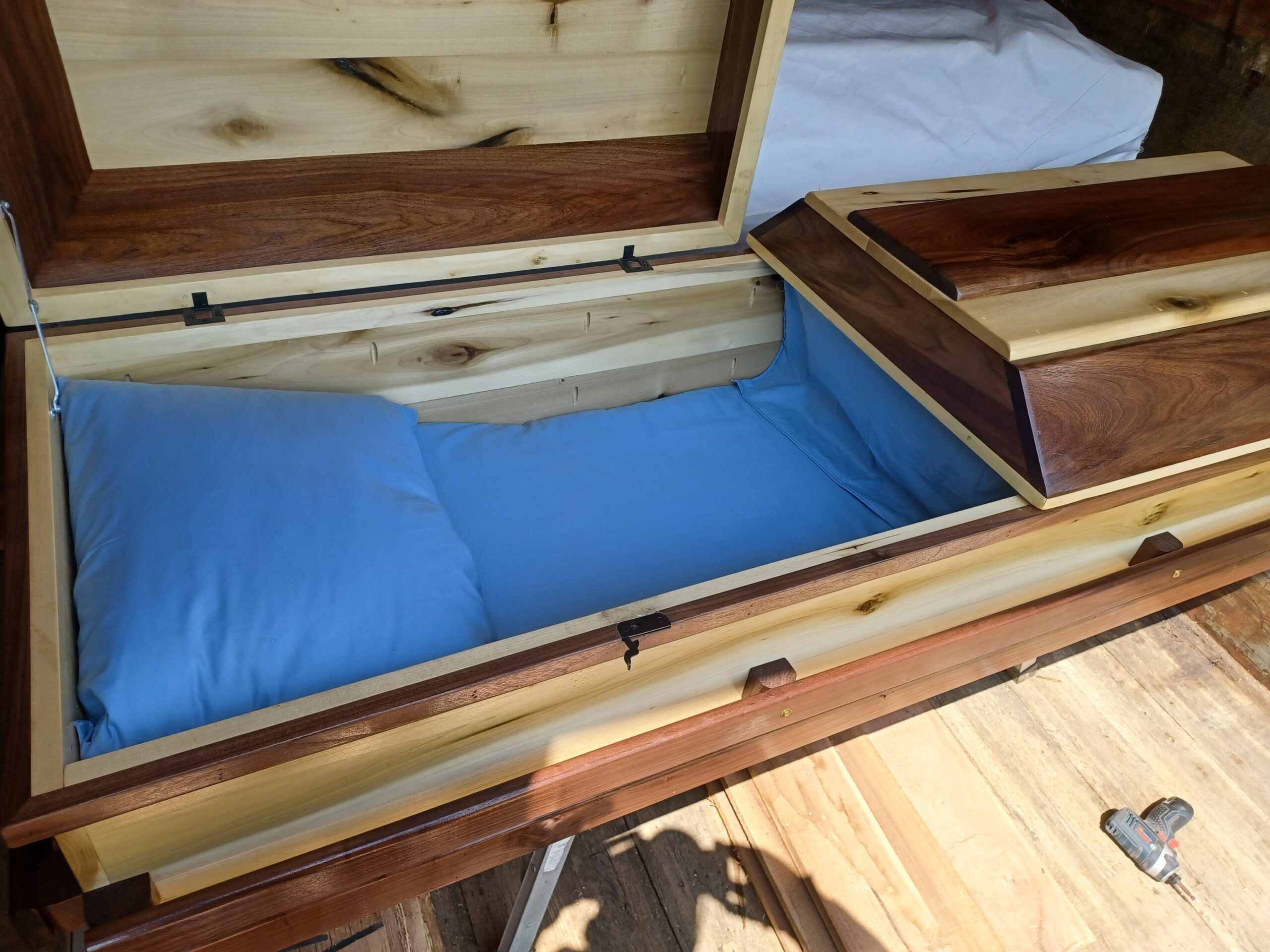
Interior colors are discussed during your design consultation. We’ll ask about the anticipated attire to ensure the presentation is cohesive from the wood to the fabric.
Patent Pending · Exclusively Randolph's
The Wood Carries Through. All the Way Through.
Everything on this page describes the material and the craft that go into a standard commission. For our themed transition system pieces, all of that applies — and then the piece does something that no other maker in this industry offers: it carries the full three-dimensional expression of a life from the moment of viewing through to burial. Due to the complexity of some themes there may be limitations on species selection based on design complexity and wood characteristics. The mechanism is patent-pending and we’re not describing the specifics here. What we’ll tell you is that it works, that it’s built from the same hardwoods and the same craft that every other piece on this bench receives, and that once you understand what it does, you’ll wonder why it took this long for someone to build it.
Ready to Begin
Start With a Conversation
You’re not committing to anything in a consultation. You’re talking to the people who build this work about the person it will honor. That’s all it is. We’ll take it from there.